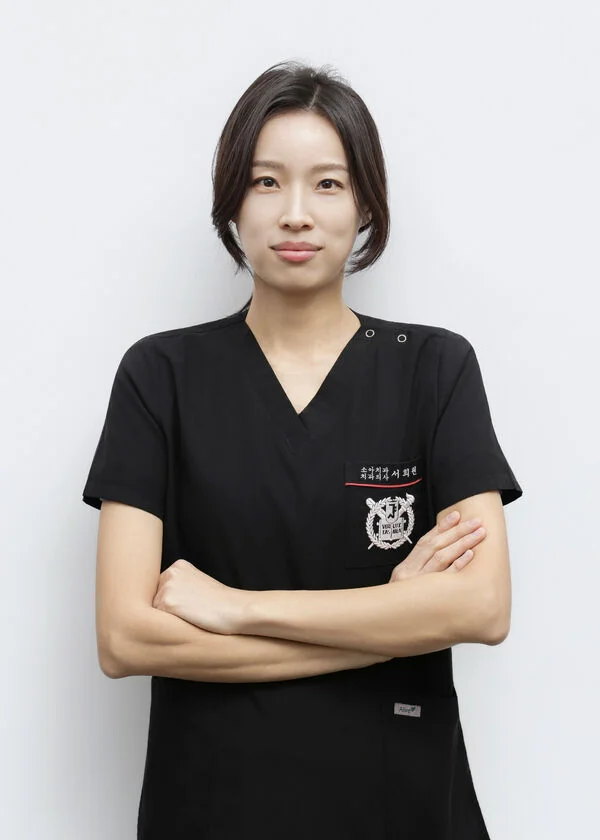
Why I became a dentist
For me, whether in clinical care or in meeting people, the most important value is sincerity.
There wasn’t a particular incident that made me become a dentist, but approaching people with genuine sincerity has always guided my life in a positive direction. Seeing patients in pain regain comfort through treatment, and helping that change up close, gave me great fulfillment, and those experiences naturally gave me the conviction to choose the path of dentistry.
Clinical expertise
As a board-certified pediatric dentist, I understand children's developmental stages and provide treatment and behavior management tailored to their pace of development, and I'm confident in this approach.
Children need an entirely different approach.
Even with the same symptoms, treatment varies by age, stage of development, and level of cooperation, and during care we also need to address emotions such as fear, anxiety, and curiosity. I consider it a strength to understand these complex factors in depth and tailor my approach to each child.
Treatment Style
If I were to express my treatment style in one sentence,
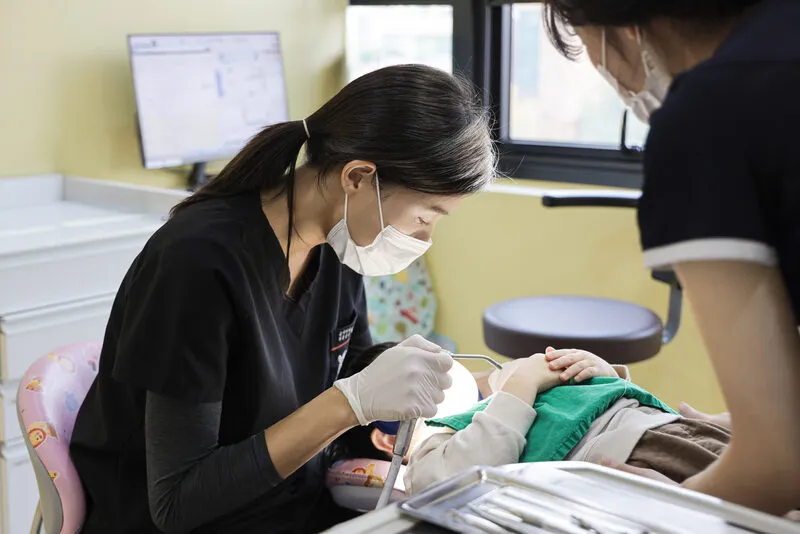
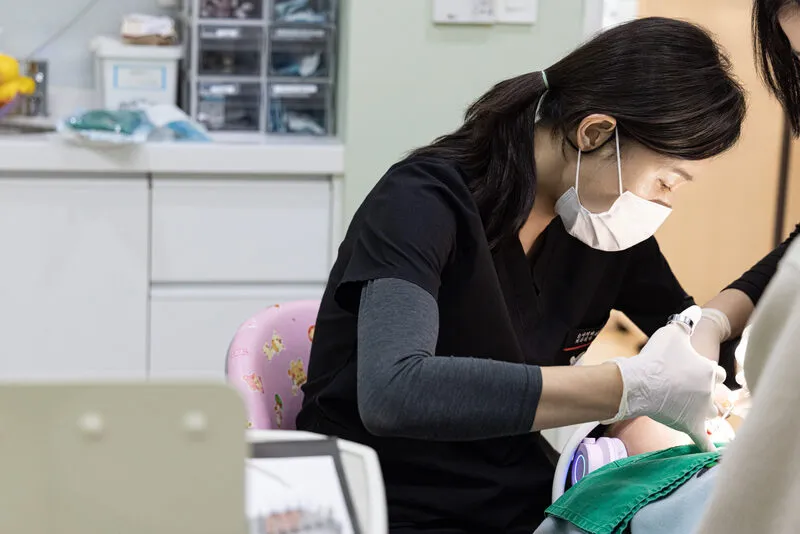
A dental office can feel unfamiliar and stressful for a child. So from the first explanation through the procedure, I present everything in ways a child can understand, and I aim to deliver precise care in the shortest reasonable time to reduce their burden and fatigue.
Care Philosophy
The principle I value most is
Pediatric care is not just about fixing cavities; it must consider the child's overall growth. Even with the same condition, diagnosis and treatment differ by developmental stage, and the way we approach care also changes.
Because fear and anxiety affect not only a child's cooperation but also their future dental experiences, I always work to ensure the child experiences trust, not trauma, through the treatment process and design their care accordingly.
Advice for Parents
I always emphasize to parents keeping regular brushing times and using dental floss daily as essential.
Regular fluoride applications are helpful, but ultimately the key to oral health lies in habits and daily home care. Because prevention is more powerful than treatment, I believe daily care is the foundation of all treatment.
Most Memorable Case
The most memorable case was the first I handled during my residency: a 3-year-old patient.
The child presented with a suspected periodontal abscess, but the radiograph suggested a possible malignancy, so a precise differential diagnosis was needed. It could easily have led to inappropriate treatment in another department, but with the right diagnosis and referral, the child was ultimately diagnosed early with leukemia.
It made me realize that an initial pediatric dental visit can go beyond a simple tooth problem and serve as an important gateway to protecting a child's overall health.
Current Interests
Lately, I have been studying clear aligner orthodontics, including Invisalign more systematically.
Because changes in the dentition during growth are intricately interrelated, I focus not merely on placing appliances, but on deepening my understanding of which treatments are most appropriate at each developmental stage. Orthodontic care during growth is a pivotal period that shapes a child's future oral health, so it requires an even more careful and systematic approach.
A Personal Note
My colleagues describe me as "a people person who naturally brightens the mood"they say. I enjoy meeting new people, and I also like organizing small get-togethers where those around me can connect.
This trait naturally shows in the treatment room as well, helping children feel at ease and giving parents a sense of trust.
Currently a parent of two children, I stay deeply engaged with children’s development, education, and emotional changes even outside the clinic. I find joy in everyday moments with my children, and these experiences add meaningful depth to my perspective and approach as a pediatric dentist.