Does your jaw hurt or make noises?
Specialized TMJ (Jaw Joint) Disorder Treatment
TMJ DisorderWhat is it?
TMJ disorder (TMD) is a condition in which pain, noises, or limited movement occur in the jaw joint or surrounding muscles. Teeth Grinding (Bruxism), stress, Malocclusion can be causes; treatment may include a splint, physical therapy, or Botox.
TMJ pain, clicking sounds, Limited mouth opening We accurately diagnose and systematically treat a wide range of TMJ problems.
Do you have any of these symptoms?
These are common symptoms of TMJ disorder
Jaw noises
Do you hear a "click" or "pop" when you open your mouth?
I can't open my mouth
Is it hard to open wide, or do you feel restricted?
Jaw pain · Headache
Do you have pain around the jaw or at the temples?
Ear pain
Do you feel pain in front of the ear?
TMJ treatment Lead Doctor
Oral Medicine Specialistwill identify the root cause of your TMJ pain
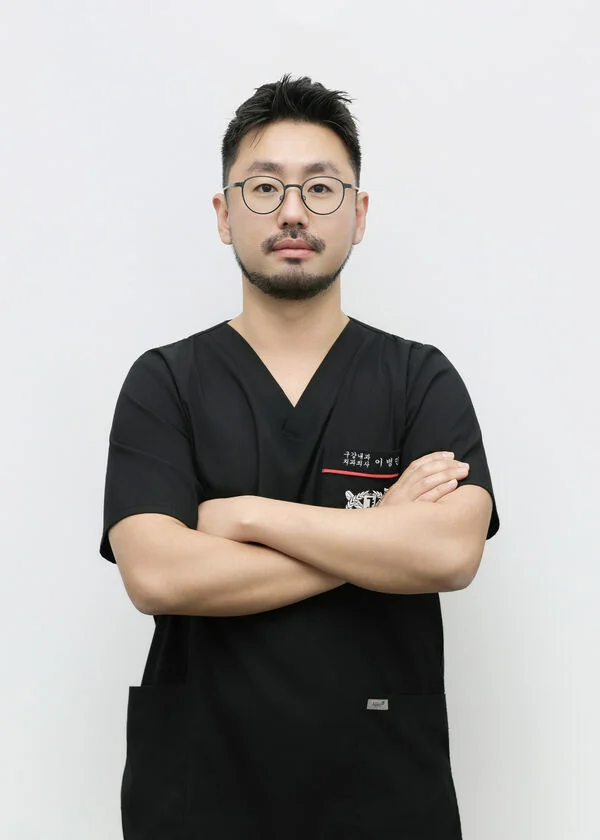
Byungmin Lee Clinic Director
TMJ disorder · Chronic orofacial pain · Teeth Grinding (Bruxism)
- Seoul National University, College of Dentistry
- M.S., Seoul National University Graduate School of Dentistry
- Oral Medicine Specialist
- Full member of the Korean Academy of Oral Medicine
- Specialist in TMJ (Jaw Joint) disorders and chronic orofacial pain
TMJ (Jaw Joint) Treatment process
Accurate diagnosis is where treatment begins
Comprehensive diagnosis
TMJ-specific testing, 3D CT, and occlusion analysis to identify the cause.
Occlusal stabilization splint
We fabricate and fit a custom splint (occlusal stabilization appliance).
Physical therapy & medication
We combine muscle relaxation, physical therapy, and medications when needed.
Occlusal adjustment
If bite issues are the cause, we perform occlusal adjustment.
Monitoring progress
We monitor changes in symptoms and Treatment planadjust the plan.
Patient See reviews
See real reviews on Naver and Google
Frequently Asked Questions
Find answers to your questions
Even if there’s only noise, the condition can progress, so we recommend an evaluation.
In most cases, conservative treatmentcan greatly improve symptoms. Full recovery may take several months.
Mostly during sleep. Depending on your symptoms, daytime wear may also be needed.
Dentists provide specialized diagnosis and treatment. We comprehensively evaluate bite issues, teeth grinding (bruxism), and muscle tension—the main causes of TMJ disorder—and provide personalized care.
Cold packs help during acute flare-ups; heat helps with chronic pain. If it lasts more than 2 weeks, please get an exam. Self-care alone can’t resolve the root cause.
TMJ disorder (TMD) is a collective term for conditions causing pain, noise, or limited opening in the jaw joint and surrounding muscles. Typical signs include “clicking” or “creaking” when you open your mouth, jaw pain, or difficulty opening wide.
If there’s only noise without pain, treatment isn’t always necessary. However, if pain occurs, your mouth won’t open well, or the sound worsens, you should be evaluated by a specialist. Leaving it untreated can make it worse.
Teeth grinding/clenching habits, stress, trauma, malocclusion, chewing only on one side, and prolonged mouth opening (dental treatment, yawning) can all contribute. Multiple factors often act together.
① Occlusal stabilization splint(splint) wear ② Medication (anti-inflammatory pain relievers, muscle relaxants) ③ Physical therapy ④ Habit correction (avoid clenching) ⑤ Botox injections (for severe muscle tightness). Most cases improve with conservative care, and surgery is rarely needed.
It’s hard to eliminate grinding completely, but a nighttime occlusal guard (night guard) can reduce tooth wear and TMJ load. Stress management, cutting back on caffeine, and relaxation exercises before bed also help.
Mild cases: 2–4 weeks; moderate: 3–6 months; chronic TMJ disorder: 6 months or more. Consistent treatment and habit changes are important.
Recognize + correct clenching habits, reduce hard foods (squid, ice, etc.), chew evenly on both sides, avoid resting your chin on your hand, manage stress, and get enough sleep.
At Seoul BD Dental, a TMJ and orofacial pain specialist (Dr. Byungmin Lee) is on site, and we operate a TMJ clinic to Seoul National University standards. With CT/MRI-based precision diagnostics and custom-made splints, we provide systematic care.
TMJ disorders—consult a specialist
With an accurate diagnosis, we recommend only the treatment you truly need.
Open 365 days | Weekdays 09:00-20:00 | Sat·Sun·Holidays 09:00-13:00
On this topic, a column written by our director
We’ve compiled the questions we get most often in the clinic.
- TMJ disorders: When should I visit the clinic, and what tests are done?Dr. Seokjun Moon
- TMJ disorders: What should I do if it hurts or makes a noise when I open my mouth?Dr. Seokjun Moon
- TMJ pain: How much can physical therapy and jaw exercises help?Dr. Seokjun Moon
- Can TMJ problems cause headaches, ear fullness, or tinnitus?Dr. Seokjun Moon